Tuesday, August 8, 2017

Vanilla Frozen Yogurt


I have this weird habit of doing more than normal amounts of cooking before big life events. The night before I took the SAT for the first time, I was not studying, taking a practice test, or even goofing off with friends. Nope, not me! I was making broccoli soup and chive biscuits. First finals week in college? Stuffed mushrooms and cheesecake-swirled brownies. Month leading up to my wedding? Oh my. Anyway, I think cooking may just be something of a stress response for me. But if cooking tends to cause more stress for you than it relieves, this frozen yogurt is the perfect recipe to have in your repertoire. It takes all of 3 ingredients and 3 minutes to prepare, and yet it is perfectly sweet and tangy and sophisticated all at once. Also, these pictures were taken three days prior to my nuptials, in case you were wondering.

Homemade frozen yogurt is a far cry from the stuff out of a yogurt shop. I’ve never had anything against yogurt shops, but now that I know I can get what tastes like superb, mildly tart cheesecake in soft, frozen form with little more effort than preparing a bowl of cereal, I will never feel the same about by-the-weight dispensed yogurt again.

This recipe is from David Lebovitz’s wonderful book, “The Perfect Scoop.” It does require an ice cream maker, but you can find fairly inexpensive models these days if it’s worth it to you. And oh, it is so worth it. I particularly like this maker because it doesn’t take up loads of space, it’s easy to clean, and I can control exactly how fast or slow I want to churn the ice cream.*

Fun Fact: The amount of air whipped into ice cream is called the overrun. Cheaper ice creams at the store typically have more overrun, or more air whipped into them, which is why they have a light and foamy texture (and also cost less). The more expensive brands, such as Haagen-Dazs, typically have less overrun, which is why their mouthfeel is so much creamier. *This is also why I like to be able to control how much air is whipped into my ice cream at home.


Vanilla Frozen Yogurt

From “The Perfect Scoop” by David Lebovitz

3 cups whole milk plain yogurt**
1 cup granulated sugar
1 teaspoon vanilla extract

Stir all ingredients together until the sugar has dissolved, cover, and chill in the refrigerator for an hour or longer. Pour into ice cream maker, and freeze according to the instructions for your machine. This yogurt is particularly good topped with fresh fruit or berries sprinkled with sugar.


** Or, since grocery stores sell yogurt in quarts, you could just increase everything here by 1/3…I’m sure no one would mind.

Monday, June 26, 2017

In Which an Alaskan Pollock and a Bangladeshi Chapati Travel Together to Latin America and Have a Marvelous Time


I admit I don’t know what to call these. In my mind, they’re Indian fish tacos, being neither authentically Indian nor authentically tacos. So, maybe they’re “Indian” Fish “Tacos” (not Indian “Fish” Tacos) or maybe they’re just Hipster Fish Sandwiches. Whatever. At any rate, please eat them because they are delicious, and then maybe you can tell me what their proper name is.


This dish came about because of a “when life gives you lemons, make lemonade” scenario. Just replace the word lemons with “disgustingly under-ripe papaya” and the word lemonade with “chutney!” and you’ll have a good idea of what happened. So with a large quantity of delicious chutney hanging out in my fridge, I began scheming about putting it on top of a nice mild fish. I was also in the mood for fish tacos. Taking the flavors from the chutney as my cue, I decided to add a twist and use whole wheat chapatis instead of tortillas. I finished my “tacos” off with a toasted cumin and lime slaw, bringing some earthy crunch to balance the sweetened papaya. I hope you enjoy these as much as I do.


Anglo-Indian-Inspired Fish Flatbread Sandwiches of Appalling Inauthenticity

Fish
Three 4-oz. frozen tilapia or Pollock filets
butter, to taste
paprika, to taste
salt, to taste
lime or lemon juice, to taste

Bake fish on an oiled baking tray for the length of time specified on the package, or until the fish reaches 145 degrees Fahrenheit internally. Remove fish from oven, and immediately place a small pat of butter on each filet, moving it around to melt. Sprinkle with paprika, salt, and citrus juice to taste.

Toasted Cumin Slaw
½ teaspoon whole cumin seeds
1½ cups shredded green cabbage
2 Tablespoons mayonnaise
1½ - 2 Tablespoons lime or lemon juice
salt to taste

Toast cumin seeds in a dry skillet over medium heat, tossing occasionally, until golden brown and fragrant. Combine all ingredients, adding more cabbage if too wet or more mayonnaise if too dry. Chill until ready to use.

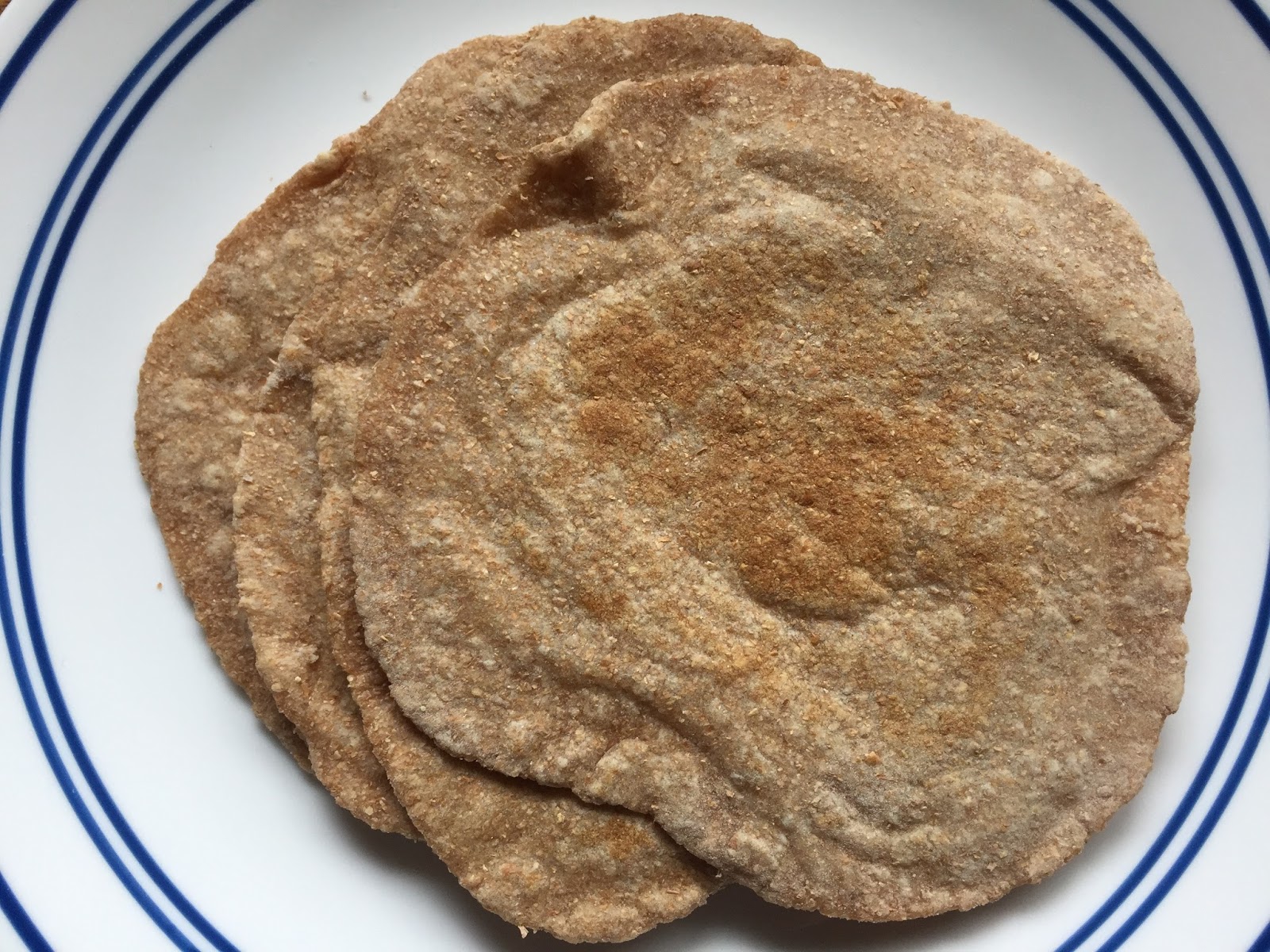
Chapatis (adapted from Hot Bread Kitchen)
1 cup minus 1 Tablespoon water
½ teaspoon salt
1 cup plus 2 Tablespoons whole wheat flour

Bring the water and salt to boil in a pot with a well-fitting lid. Once fully boiling, add all the flour, and mix thoroughly with a spoon, wooden or otherwise, to incorporate. Place the lid on the saucepan, and let sit for about 2 minutes so the flour can hydrate.

Place the hydrated dough into a mixing bowl/Kitchen Aid (or continue right in the pot), and mix with dough hook or other utensil until the dough is stiff and resembles cookie dough. (The original recipe states some number of minutes for this, but I find that mine reaches this point almost instantly, and thus I never mix for very long.)

Remove dough from pot, and place on a lightly floured work surface. Knead carefully – it’s hot! – until dough comes together in a smooth ball. Roll the dough out into a log, and divide into six equal portions. Roll each portion into a ball, and flatten slightly.

Place a dry skillet – cast iron works great here, but nonstick works too – over medium heat. With a floured rolling pin, roll each dough disk into a chapati circle about 6 inches in diameter. Cook chapatis one at a time: let cook 15 seconds on the first side, and then flip and cook 45 seconds on the other side. Flip once more, and let cook an additional 30-60 seconds until golden. On this flip, the chapati may puff up like a balloon, filling with steam. If the chapatis are browning too quickly or slowly, adjust the heat accordingly.

A proudly puffed chapati
 Chutney (at least ¾ cup)
You could make papaya chutney from this site* OR you could just buy a nice chutney from the store.

*I used this recipe, heavily adapted. I didn’t have fresh ginger, so I used between ¼ - ½ teaspoon ground ginger. I also substituted ground spices for whole (pinch of black pepper and 1/8 teaspoon or so of ground cardamom, more of both to taste. Finally, I used a bit less vinegar than stated (try ¾ the amount first). And I didn’t wait a month to eat it. I ate it immediately. That’s how I roll.


Makes enough for about 6 tacos.

Tuesday, May 23, 2017

Chermoula


I’d like to introduce you to my new friend, chermoula. Though we met scarcely two and a half weeks ago, we have become fast friends. We do everything together. Or, at least, I hope we will soon.

Chermoula, or charmoula, is an herb sauce or marinade used in various North African cuisines. It varies from region to region in its exact composition, but a typical Moroccan preparation uses parsley. This is the kind I first tried at a little Moroccan restaurant in upstate New York. It came on a colorful plate, surrounded by warm, toasted triangles of pita bread. For an unassuming green sauce, it packs a lot of flavor. It is wonderfully fresh from the herbs, bright from lemon juice, and earthy from cumin and other spices. It was my favorite dish of the evening, despite trying many other wonderful things. Now that I know how easy it is to make at home, it may become a permanent resident of my refrigerator.

Chermoula is typically served with fish or meat and also goes great with fresh bread or roasted vegetables. I tried roasting diced potatoes in chermoula. In retrospect, it might have been even better to roast the potatoes on their own (diced, with olive oil and salt in a 425 degree oven) and then put the sauce on, but it took restraint to stop eating them even the way I did it.

Fun Fact: Parsley and cilantro, along with other leafy greens, are rich in vitamin K. This vitamin is essential for making blood-clotting proteins in the body. Vitamin K deficiency is rare, however, because certain bacteria in your intestines produce it. Babies are usually injected with vitamin K at birth as a precaution because they have not yet developed as many intestinal bacteria.


Chermoula
Adapted very minimally from NYT Cooking

2 teaspoons cumin seeds
½ teaspoon coriander seeds
2 cups parsley (medium-large stems removed), about 1-2 bunches
1½ cups cilantro (stems mostly removed), about 1 bunch
3 large cloves garlic
1/3 cup extra virgin olive oil
¼ cup fresh lemon juice
½ teaspoon salt, more to taste
1 teaspoon paprika
1/8 teaspoon cayenne pepper

Toast the cumin and coriander seeds together in a small skillet over medium heat, tossing/stirring occasionally until fragrant and slightly darkened. Let cool, then grind in a mortar and pestle or electric spice grinder. Set aside.


Peel and halve the garlic cloves. Add the parsley, cilantro, garlic, olive oil, and lemon juice to a food processor or blender or tall narrow vessel (if using immersion blender). Chop/blend until the herbs and garlic are well chopped and incorporated into the lemon juice and oil. Add the remaining ingredients and reserved spices, and continue to chop until the mixture has reached a smooth paste-like consistency. Add additional salt, lemon, or garlic to taste.